
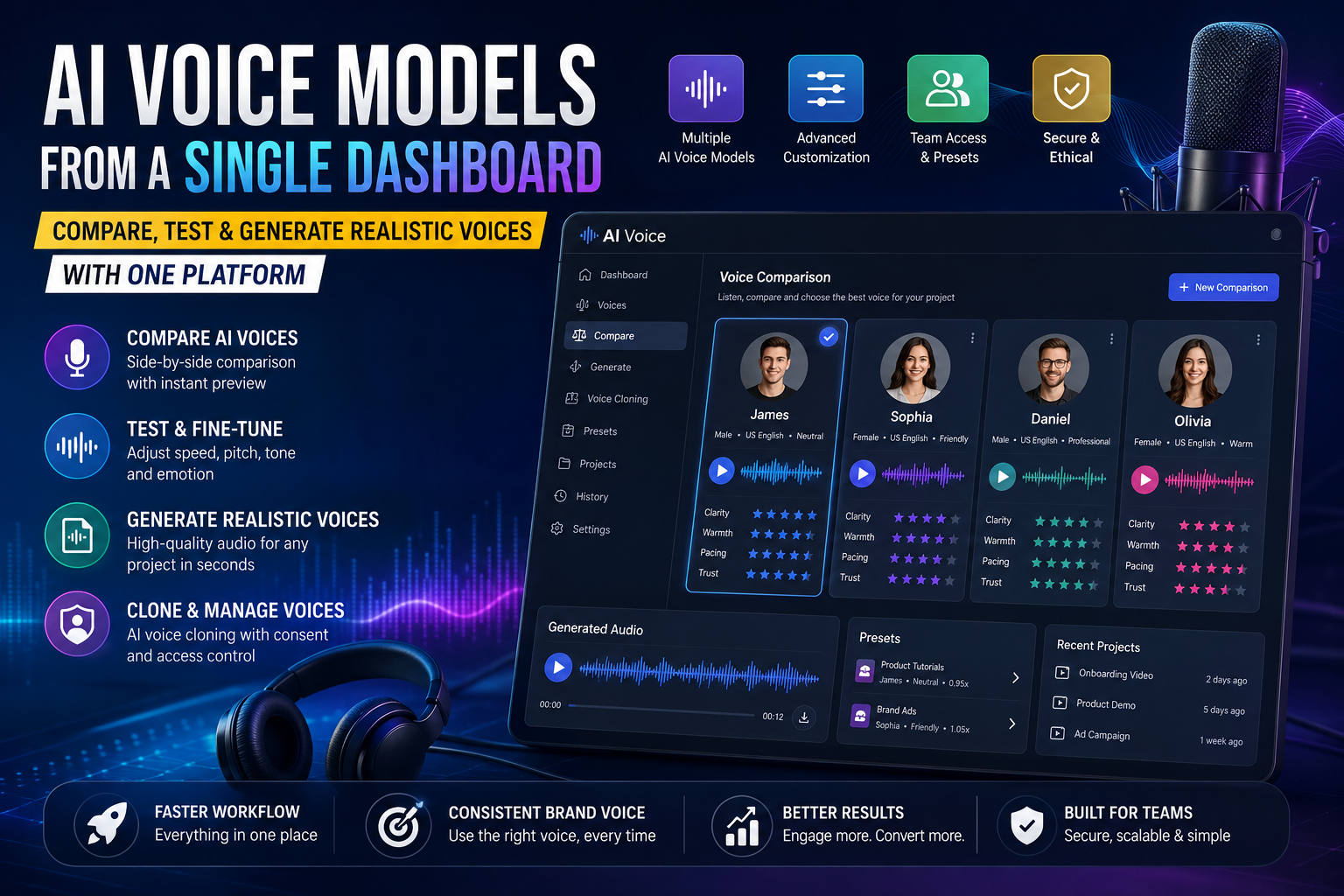
If you work with audio, video, courses, or product demos, you’ve probably tested more AI Voice Models than you’d like to admit. Each one promises natural speech, but switching tabs, exporting samples, and trying to compare them by memory gets old fast.
Centralizing AI Voice Models in a single dashboard changes that. Instead of guessing which tool sounds best, you can compare, test, and generate audio side by side and choose the right voice for every project with confidence.
Why Managing AI Voice Models From One Dashboard Matters
Most teams jump between several tools for script writing, recording, editing, and publishing, which creates friction every time someone needs updated audio.
A unified space for AI Voice Models gives you one source of truth, so marketing, product, and content teams all work from the same voices, settings, and outputs.
Core Features You Should Expect From an AI Voice Dashboard
A good AI Voice Dashboard makes testing and managing voices feel as routine as checking email, instead of a technical chore that only one person on the team understands.
Look for a layout where you can pin favorite voices, group them by brand or language, and preview different tones quickly without digging through buried menus.
Simple Workflow for Non-Technical Users
Not everyone on your team is an audio engineer, so the best tools hide complexity behind clear labels, presets, and guided flows that make voice selection feel approachable.
Features like script templates, play buttons next to each voice, and clear usage indicators help writers and marketers work confidently without constant hand-holding.
Testing and Version Control Built In
As campaigns evolve, you’ll often want to keep multiple versions of the same script to compare style, pacing, and emphasis for different audiences.
Version control inside the dashboard lets you store past takes, tag them by campaign or channel, and quickly roll back if a new read doesn’t perform as well.
How to Compare AI Voice Models Side by Side
Structured AI Voice Comparison beats listening randomly and hoping your ears remember the differences after ten samples.
A simple, repeatable comparison process helps you pick voices that fit your brand tone instead of being swayed by whichever sample you heard last.
A Practical Voice Comparison Workflow
Start by locking in one standard test script that reflects the type of content you create most, whether that’s sales narration, product education, or support content.
Then follow a clear sequence to compare voices more objectively:
- Create a short script with neutral language and no tricky brand terms.
- Generate audio with multiple voices using identical settings.
- Rate each voice on clarity, warmth, pacing, and perceived trust.
- Save your top three voices to a “preferred” group for future projects.
This makes it easier to pick a consistent AI Voice Generator for recurring campaigns without starting from scratch every quarter.
Read Also :- our full OneVoice AI review
Listening for the Details That Actually Matter
Many people focus only on accent and gender, but what really affects listener fatigue is rhythm, micro-pauses, and how well the voice handles numbers and acronyms.
Notice how your chosen AI Text to Speech option reads web URLs, prices, and technical phrases that show up regularly in your scripts.
From Testing to Production: Generating Realistic AI Voices
Once you’ve narrowed your shortlist, the next challenge is turning tests into a production workflow that scales across product tours, ads, and support videos.
This is where Realistic AI Voices make a real difference, especially when your listeners are used to polished audio from podcasts and professional narrators.
Dialing In Natural Delivery Settings
Most dashboards offer fine-tuning for speed, pitch, and emphasis, and small adjustments here can be the difference between “good enough” and “this sounds human.”
It’s smart to create presets for different use cases, like a slower setting for tutorials and a snappier AI Speech Generator setting for short social clips.
Keeping Brand Consistency at Scale
Teams often underestimate how jarring it feels when a company’s help center sounds different from its ads or onboarding flows.
Document which model, language, and style settings power your Best AI Voice Generator choice for brand content, and store them as shared presets everyone can access.
Using AI Voice Cloning Safely and Ethically
AI Voice Cloning can save hours of studio time, especially if you work with subject-matter experts who can’t be in front of a microphone every week.
Still, you should always operate with explicit voice owner consent, clear agreements, and careful control over where cloned audio is allowed to appear.
Approval, Consent, and Access Controls
Before cloning any person’s voice, get written permission that explains where and how their voice will be used, stored, and retired if they leave the company.
Limit access to cloning tools to a small group of admins, and log every export so you can trace who generated which clip and for what purpose.
Where Cloned Voices Work Best
Cloned voices shine in recurring formats like weekly release notes, standard onboarding videos, or recurring customer education segments.
For sensitive topics or major external announcements, consider pairing cloned audio with a final human review step or a traditional AI Voice Synthesis model that’s less personal.
Practical Tips to Get More From Your AI Voice Stack
If your team already uses several tools, a bit of structure will help you avoid duplicate work and keep outputs sounding consistent across channels.
Build a short internal playbook that explains which project types should use which AI Voice Models so teammates aren’t forced to guess.
Organizing Voices by Use Case
Instead of one long list of voices, create small collections such as “product tutorials,” “brand ads,” and “internal training.”
This makes it easier for people to pick the right AI Voice Dashboard preset without accidentally grabbing a tone that feels off-brand for the task.
Measuring Performance, Not Just Sound Quality
Good audio isn’t just about how it sounds in headphones; it’s about how it performs in the wild with real listeners.
Run simple tests comparing completion rates, watch time, or conversion for content produced with your preferred AI Voice Comparison setup versus older recordings.
Key Takeaways and Next Steps
A single platform for managing AI Voice Models makes it far easier to compare options, lock in your brand sound, and push consistent audio into every channel you care about.
If you’re ready to test voices side by side, document presets, and build a repeatable workflow your whole team can use, explore a dedicated dashboard and put it through a real project, then refine from there with help from Ai Buyer Guide.
