
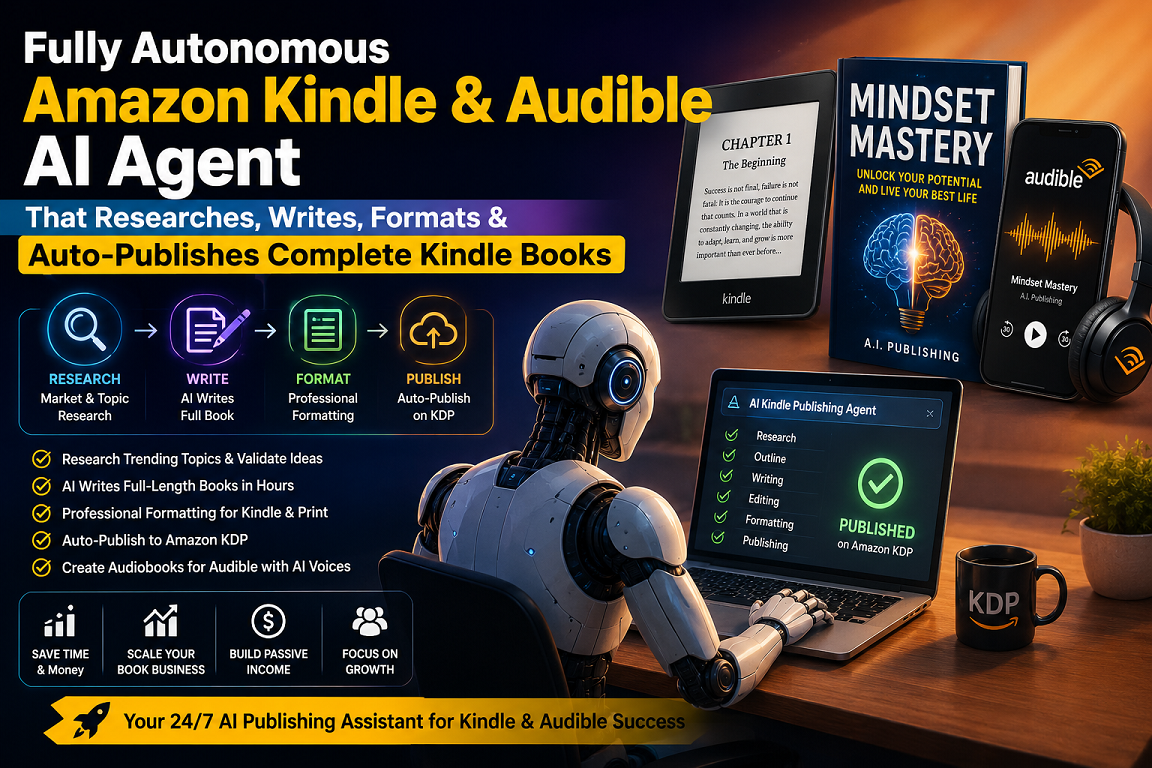
Publishing a full Kindle book used to mean weeks of research, outlining, drafting, formatting, and wrestling with KDP uploads. If you’re hearing about an Amazon Kindle AI Agent that promises to handle most of that for you, it’s natural to ask how real it is, what it can actually do, and where the limits are.
This guide walks through how a modern setup can research topics, draft chapters, format files, and even prepare audio editions while still keeping you in control of quality and strategy. You’ll see what’s possible, what’s risky, and how to use these tools as a serious publisher rather than chasing shortcuts.
What Is an Amazon Kindle AI Agent, Really?
At a simple level, an Amazon Kindle AI Agent is a stack of tools and automations that work together to research, outline, draft, format, and prepare your book for KDP with minimal manual effort.
Instead of one giant tool doing everything, think of it as a coordinated assistant that follows rules you set, checks in where needed, and hands you files that are almost ready to publish.
Core Capabilities You Can Expect
A solid AI Kindle Book Generator doesn’t just spit out generic text; it follows a structured workflow that mirrors how a real author works.
Usually it will handle idea validation, outline building, draft creation, and version control so that you can stay focused on direction, niche selection, and brand voice.
What It Should Not Do (If You Care About Longevity)
Even the smartest AI Book Writing Software shouldn’t be left alone to publish under your name without review.
You still need to check factual accuracy, originality, tone, and compliance with Amazon guidelines so that your catalog isn’t one policy update away from being pulled.
How a Full AI Workflow for Kindle Content Actually Works
Let’s break down what a practical, mostly automated pipeline looks like from idea to live product.
This isn’t theory; it mirrors the kind of systems serious publishers test and refine to handle multiple titles across a catalog.
Step 1: Research and Topic Validation
Your AI Book Publishing Tool should start by pulling data from search trends, bestseller lists, and niche forums to identify demand.
The goal is to avoid wasting effort on ideas nobody wants, and instead choose angles where you can realistically compete against existing titles.
Step 2: Outlining and Draft Creation
Once you’ve approved a topic, an Amazon KDP AI workflow can expand your brief into a chapter-by-chapter outline.
From there, it can draft sections in batches so you can review key chapters early, spot problems with structure, and correct the voice before the whole book is generated.
Step 3: Editing Pass and Voice Alignment
Many teams pair automation with an AI Author Assistant that focuses on style, clarity, and consistency.
This layer can tighten sentences, suggest better transitions, and maintain a recognizable tone across an entire series if you feed it good examples up front.
From Draft to KDP-Ready: Formatting and Structure
Once the content is in good shape, you need clean files that work across Kindle devices, apps, and print options.
This is where layout details, internal links, and reader experience matter just as much as the words themselves.
Smart Formatting Without the Headache
An AI Book Formatting Tool can turn your raw manuscript into a structured file with proper chapters, a working table of contents, and consistent heading styles.
That same tool can also handle front and back matter templates so your branding and call-to-action pages stay consistent around your catalog.
For teams publishing at volume, using an AI Kindle Publishing workflow means ePub and print-ready PDFs can be produced with the same style rules every time.
This is especially useful if you run multiple pen names or series and want each to feel coherent without hand-formatting every single title.
Expanding to Audio: From Kindle Book to Audible-Ready
Ebook demand is strong, but audio listening keeps growing across business, self-help, and fiction niches.
If your workflow stops at text, you’re leaving a big slice of the market on the table, especially with platforms that favor complete ecosystems.
An Audible AI Audiobook Creator can turn your final manuscript into a narrated audio file using natural-sounding voices tailored to genre and audience.
You still need to review the narration, catch mispronunciations, and adjust pacing, but the cost and time drop compared with traditional studio recording.
The same AI Book Creation Platform can keep your ebook and audio versions aligned when you update content, so corrections and new editions don’t drift out of sync.
That’s particularly important for nonfiction where facts, tools, and references change quickly and readers expect current information.
Best Practices to Keep Your Catalog Safe and Profitable
Automation doesn’t remove your responsibility as a publisher; it just moves your effort from typing every sentence to making better decisions.
If you want recurring royalties rather than short-lived spikes, guardrails matter more than raw speed.
First, treat your AI Book Writing Software as a drafting partner, not a ghostwriter that can be left alone.
Always check for originality, run your own fact checks, and make sure your sources are credible enough to withstand reader scrutiny.
Second, document a clear content policy for your Amazon Kindle AI Agent so it avoids restricted topics, medical claims, or financial advice that breach KDP rules.
This written playbook also helps if you bring in human editors later and need everyone following the same standards.
Third, use your AI Book Publishing Tool to maintain consistency: series naming conventions, calls to action, email list mentions, and cross-promotion between titles.
Readers feel more confident buying more books from an author who seems organized, intentional, and respectful of their time.
Bringing It All Together for Scalable Publishing
A thoughtful Amazon Kindle AI Agent setup doesn’t replace you; it frees you to think like a publisher instead of a stressed-out one-person production line.
Define clear rules, keep a tight review loop, and let the automations handle the repetitive heavy lifting while you focus on topics, positioning, and reader trust with Ai Buyer Guide as your source for deeper comparisons and tools.